How to Choose the Best Water Filter in Sri Lanka: Types, Prices & Water Quality Explained
20 min read
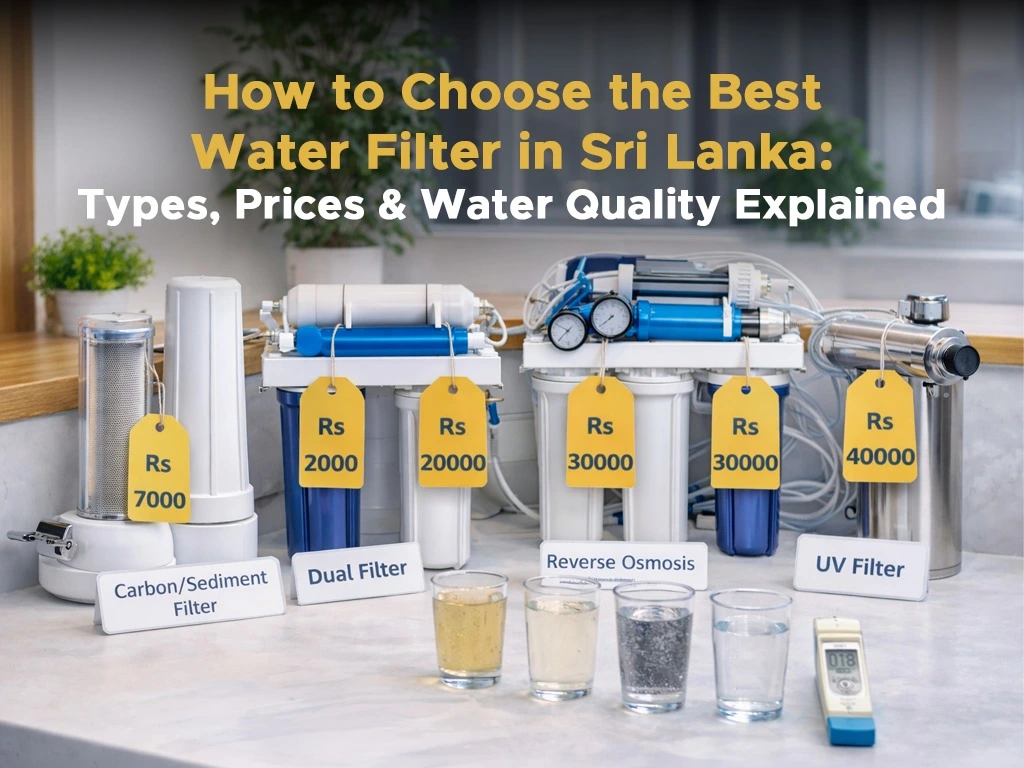
Access to clean and safe drinking water is becoming one of the most important health concerns for households in Sri Lanka. While many people assume that clear water is safe water, the reality is far more complex. Invisible contaminants such as bacteria, dissolved salts, heavy metals, and agricultural chemicals can exist even in water that looks clean and tastes normal.
Because of this, choosing the right water filter in Sri Lanka is no longer a luxury - it is a necessity. However, with so many options available, including RO systems, UV filters, carbon filters, and multi-stage water purification systems, many homeowners struggle to understand what they actually need.
This in-depth guide explains Sri Lanka’s water quality, the types of water filters available, pricing and maintenance costs, and how to choose the best water filtration system based on your water source and daily usage. Whether you are researching a water purifier in Sri Lanka, comparing a water purifier filter, or looking for the best water filter in Sri Lanka for your family, this guide will help you make an informed decision.
Understanding Water Quality in Sri Lanka
Sri Lanka’s water quality varies significantly depending on geography, water source, and infrastructure. The country relies mainly on surface water (rivers and reservoirs) and groundwater (wells and tube wells). While the National Water Supply and Drainage Board treats municipal water, contamination can still occur at various stages.
Common Water Quality Issues Found in Sri Lanka
Across many regions, households experience one or more of the following issues:
- Hard water caused by high calcium and magnesium content
- High Total Dissolved Solids (TDS), especially in groundwater
- Bacterial contamination from poorly protected wells
- Agricultural runoff, including nitrates and pesticides
- Heavy metals such as arsenic and iron in certain areas
- Sediments, rust, and sand from ageing pipelines
Because these issues differ from place to place, a single water purification filter is not suitable for all homes. Choosing the wrong system may either fail to remove harmful contaminants or unnecessarily remove essential minerals.
Why a Water Filter Is Important for Sri Lankan Households
Many Sri Lankans rely on boiling water as a safety measure. While boiling can kill bacteria and viruses, it does not remove chemical contaminants, heavy metals, or dissolved salts. In some cases, boiling water with high TDS can even increase mineral concentration.
A properly selected water filtration system provides:
- Safer drinking water
- Better taste and odour
- Reduced risk of waterborne diseases
- Protection for children, elderly family members, and pregnant women
This is why more households are turning to modern water filter machines instead of relying solely on traditional methods.
Identifying Your Water Source Before Choosing a Filter
Before purchasing a water filter in Sri Lanka, it is essential to understand where your water comes from.
Pipe-Borne (Tap) Water
Municipal water is treated but may become contaminated due to:
- Old pipelines
- Intermittent supply
- Poor storage tanks
Well Water
Well water often contains:
- High hardness
- Bacteria
- Sediments
- Agricultural chemicals
Tube Well / Bore Well Water
Typically has:
- Very high TDS
- Salts and heavy metals
- Poor taste
Each source requires a different water purification system to ensure safety.
Types of Water Filters Available in Sri Lanka (Explained in Detail)
Understanding filtration technologies is the key to choosing the best water filter.
1. Sediment Water Filters
Sediment filters are the most basic form of water filtration. They remove visible impurities such as:
- Sand
- Mud
- Rust
- Suspended particles
These filters are usually installed as pre-filters to protect advanced systems like RO and UV units.
Advantages
- Extends life of other filters
- Improves water clarity
Limitations
- Does not remove bacteria or chemicals
Sediment filters are essential but should not be used alone as a complete water purifier filter.
2. Carbon Water Filters
Carbon filters use activated carbon to absorb contaminants such as:
- Chlorine
- Organic compounds
- Bad taste and odour
They are commonly found in water purifiers in Sri Lanka used for tap water.
Advantages
- Improves taste and smell
- Reduces chlorine exposure
Limitations
- Cannot remove TDS or bacteria
Carbon filters work best when combined with other purification methods.
3. UV Water Filters
UV water filters use ultraviolet light to disinfect water by destroying microorganisms.
They are effective against:
- Bacteria
- Viruses
- Parasites
Advantages
- Chemical-free purification
- Maintains mineral content
Limitations
- Does not remove chemicals or dissolved solids
- Requires electricity
UV systems are ideal for households using relatively clean municipal water.
4. RO Water Filters
Reverse Osmosis (RO) systems are among the most advanced water purification systems available in Sri Lanka.
They remove:
- High TDS
- Heavy metals
- Nitrates
- Fluoride
- Salts
RO water filter systems are commonly recommended for well and bore well water.
Advantages
- Highest level of purification
- Improves taste significantly
Limitations
- Higher cost
- Requires regular maintenance
5. Multi-Stage Water Filtration Systems
Multi-stage systems combine:
- Sediment filtration
- Carbon filtration
- UV or RO purification
Many water filter suppliers in Sri Lanka, including PureHydro, design customised systems based on local water test results. These systems provide balanced purification without over-processing water.
RO vs UV vs UF: Which One Should You Choose?
This is one of the most common questions when buying a water filter in Sri Lanka.
Feature
Removes bacteria
Removes TDS
Removes chemicals
Suitable for well water
Electricity required
RO
Yes
Yes
Yes
Yes
Yes
UV
Yes
No
Limited
No
Yes
UF
Yes
No
Limited
No
No
For high-TDS groundwater, RO systems are necessary. For treated tap water, UV systems are usually sufficient.
Water Filter Prices in Sri Lanka: A Detailed Breakdown
The price of a water filter machine depends on technology, capacity, and build quality.
Average Price Ranges
- Basic sediment & carbon filters: LKR 15,000 - 30,000
- UV water purifiers: LKR 35,000 - 75,000
- RO water filter systems: LKR 75,000 - 250,000+
- Whole-house filtration systems: Custom pricing
While cheaper options may seem attractive, low-quality systems often result in higher long-term costs.
Maintenance Costs and Long-Term Considerations
A water purification filter requires proper maintenance to function effectively.
Key factors include:
- Filter replacement intervals
- Availability of genuine spare parts
- Service support
Trusted water filter suppliers in Sri Lanka ensure long-term reliability and consistent water quality.
How to Choose the Best Water Filter in Sri Lanka (Step-by-Step Guide)
Step 1: Conduct a Water Test
A water test reveals:
- TDS levels
- Hardness
- Microbial contamination
Step 2: Define Your Usage
- Drinking only
- Cooking and drinking
- Whole-house filtration
Step 3: Match Technology to Water Quality
Avoid under- or over-purification.
Step 4: Choose a Reliable Supplier
Established providers such as PureHydro offer solutions designed specifically for Sri Lankan conditions.
Supporting Topic Overview (For Future Interlinking)
Is Tap Water Safe to Drink in Sri Lanka?
Tap water quality depends on treatment efficiency and distribution systems. A detailed analysis will explore risks and safety measures.
RO vs UV vs UF Water Filters in Sri Lanka
This comparison guide will help households choose between different purification technologies based on water quality.
How to Install a Water Filter in Sri Lanka
Proper installation affects performance, efficiency, and lifespan.
Mistakes to Avoid When Buying a Water Filter in Sri Lanka
Avoid common errors such as ignoring water tests and choosing systems based only on price.
Do You Really Need a Water Filter in Sri Lanka?
This article will address myths and expert opinions on water purification.
Which Water Filter Is Best in Sri Lanka?
An expert FAQ-based guide will highlight high-quality systems available from trusted providers like PureHydro.
Why Choosing the Right Supplier Matters
Buying a water purifier in Sri Lanka is not just about the product - it’s about long-term support. Reliable suppliers provide:
- Professional consultation
- Custom system design
- Installation and servicing
- Genuine replacement filters
PureHydro is known for offering water purification systems tailored to Sri Lankan water conditions, making it a trusted option for many households.
Final Thoughts: Making an Informed Decision
Choosing the best water filter in Sri Lanka requires understanding your water quality, usage needs, and long-term costs. With increasing contamination risks, investing in a suitable water filtration system is one of the most important health decisions you can make.
By selecting the right water purification filter, you ensure safer drinking water, better taste, and peace of mind for your family.
Not sure which purifier fits your water?
Our team offers free water testing and consultation across Sri Lanka.