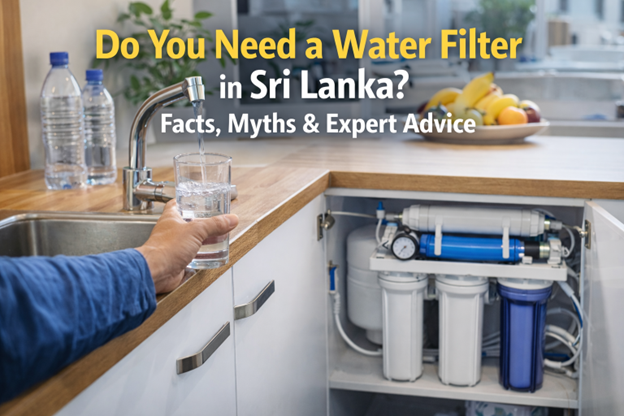
Access to clean drinking water is essential for health, safety, and quality of life. In Sri Lanka, water is widely available through municipal supplies, wells, and bottled sources. However, many households still question whether installing a water filter is truly necessary.
Some people believe Sri Lanka’s water is naturally safe, while others rely entirely on boiling or bottled water. The truth lies somewhere in between. Water quality can vary significantly depending on location, infrastructure, environmental factors, and storage practices.
This detailed guide explains the real facts, common myths, and expert insights about water filtration in Sri Lanka. It is designed to help homeowners, families, and businesses make informed decisions based on science, local conditions, and practical considerations.
Before deciding whether you need a water filter, it’s important to understand where your water comes from.
Sri Lanka has several primary drinking water sources:
Most urban areas, including Colombo, Negombo, and Kandy, receive treated water from the National Water Supply and Drainage Board (NWSDB). This water typically undergoes:
While treatment improves safety, water can still pick up contaminants during distribution.
Common concerns with municipal water include:
Municipal water is generally safe, but not always optimal for taste, long-term consumption, or sensitive individuals.
Many Sri Lankan households rely on private wells, especially in suburban and rural areas.
Groundwater quality depends on several factors:
Common issues found in well water include:
Well water is not always tested regularly, which increases potential risk.
Bottled water is widely used in Sri Lanka, especially in urban households and offices.
While convenient, bottled water has limitations:
Bottled water is not always superior to properly filtered water at home.
Sri Lanka’s tropical climate, infrastructure age, and environmental conditions contribute to specific water quality challenges.
Chlorine is used to disinfect water and kill bacteria. While effective, it can create:
Water filters with activated carbon can remove chlorine effectively.
Sediment can enter water through:
These particles may not always be visible but can affect water quality and appliance lifespan.
Hard water is common in many Sri Lankan regions.
Effects include:
Hardness is not usually dangerous but can cause long-term inconvenience.
Bacteria, viruses, and parasites may enter water through:
This can lead to waterborne illnesses such as diarrhea, dysentery, and gastrointestinal infections.
Certain areas may have traces of:
These contaminants often have no taste, smell, or visible signs.
Filtration is the only reliable method to remove many of these substances.
Many misconceptions influence whether people install water filters.
Let’s examine the most common myths.
Fact: Municipal water is treated, but safety can vary.
Water can become contaminated during distribution due to:
Even treated water may contain chlorine, sediment, or trace contaminants.
Fact: Boiling kills bacteria but does not remove chemicals or metals.
Boiling cannot remove:
Boiling also does not improve taste significantly.
Filtration addresses issues boiling cannot.
Fact: Many contaminants are invisible.
Water may appear clear but still contain:
Visual clarity is not a reliable indicator of safety.
Fact: Bottled water quality varies.
Some bottled water is simply filtered municipal water.
Home filtration systems often provide equal or better quality at lower long-term cost.
Fact: Urban areas also face water quality issues.
Even in Colombo and surrounding cities, factors such as pipeline age, chlorine levels, and storage tanks affect water quality.
Water filtration benefits both urban and rural households.
Installing a water filter can improve both safety and overall health.
Key benefits include:
Water filters remove:
This reduces long-term health risks.
Cleaner water reduces exposure to harmful microorganisms that can cause:
This is especially important for children and elderly individuals.
Filtered water tastes cleaner and fresher.
Removing chlorine and impurities improves drinking experience, encouraging better hydration.
Water used in cooking affects food quality and safety.
Filtered water ensures cleaner preparation of:
People with weakened immune systems benefit from safer drinking water.
This includes:
Many households assume filters are expensive, but they often reduce costs over time.
Regular bottled water use can be expensive over months and years.
Home filtration provides consistent access at lower cost per liter.
Filtered water reduces scale buildup in:
This extends appliance lifespan.
Removing sediment and minerals protects pipes and fixtures.
This reduces long-term repair costs.
Water filtration helps reduce plastic waste.
Sri Lanka faces growing environmental challenges from plastic pollution.
Using a home water filter reduces dependence on bottled water, supporting environmental sustainability.
Different filter types address different water issues.
Understanding these helps you choose correctly.
Best for:
Common in urban households.
Best for:
Suitable for areas with poor water quality.
Some households choose advanced systems offered by companies like PureHydro to address multiple contaminants effectively.
Best for:
Does not remove sediment or chemicals.
Often used alongside other filters.
Best for:
Common as pre-filters.
Combine several technologies for comprehensive purification.
These systems address:
The answer depends on your specific water source and quality.
However, in most Sri Lankan households, water filtration provides meaningful benefits.
You are more likely to benefit from a water filter if:
Even when water meets basic safety standards, filtration improves overall quality.
Watch for these signs:
Water testing provides the most accurate answer.
Experts recommend:
Maintenance is essential for effectiveness.
Tap water is treated but may contain chlorine, sediment, or contaminants. Filtration improves safety and taste.
Boiling kills bacteria but does not remove chemicals, metals, or sediment.
Initial cost exists, but long-term savings compared to bottled water are significant.
Multi-stage filtration systems are generally most effective due to varied contaminants.
Filtered water reduces exposure to harmful contaminants and improves overall quality.
Clean drinking water is essential for health and well-being. While Sri Lanka provides access to treated water, filtration adds an important layer of protection.
Water filters improve safety, taste, and reliability while reducing environmental impact and long-term costs.
For many households, installing a water filter is not just a convenience - it is a smart investment in long-term health and peace of mind.


